Diagnostic Guide
Why Does My Toilet Gurgle Randomly?
A toilet that gurgles randomly may be reacting to a hidden fixture discharge, partial drain restriction, venting problem, or developing sewer issue.
Short answer
What it usually means
A toilet can gurgle without being flushed because the bowl and built-in trap are connected to the home's drainage system. Water discharged somewhere else can displace air, and a partial drain restriction or ineffective venting can make that air move through the toilet's trap water as bubbles or a glugging sound. The trigger may be a shower, sink, dishwasher, washing machine, another toilet, or pumped drainage that you did not notice. One brief sound does not locate the problem, but rising bowl water, several slow fixtures, or wastewater entering a tub, shower, or floor drain calls for prompt plumbing help.
A “random” gurgle may have a hidden trigger
Before treating the sound as truly random, look for drainage activity elsewhere. Water can travel through concealed branches and stacks, so the person near the toilet may not hear the fixture that started the pressure change.
A shower or bathtub may have just emptied; a dishwasher or washing machine may have reached its drain phase; another toilet may have flushed; or a sink may have released a full basin. Homes with sewage ejectors or other pumped wastewater equipment can also have brief discharge events. These are possible triggers, not proof that the triggering fixture is defective.
Write down the time and what ran during the previous few minutes. A repeatable connection can redirect the investigation to the correct branch without repeatedly flushing fixtures into a drain that may already be struggling.
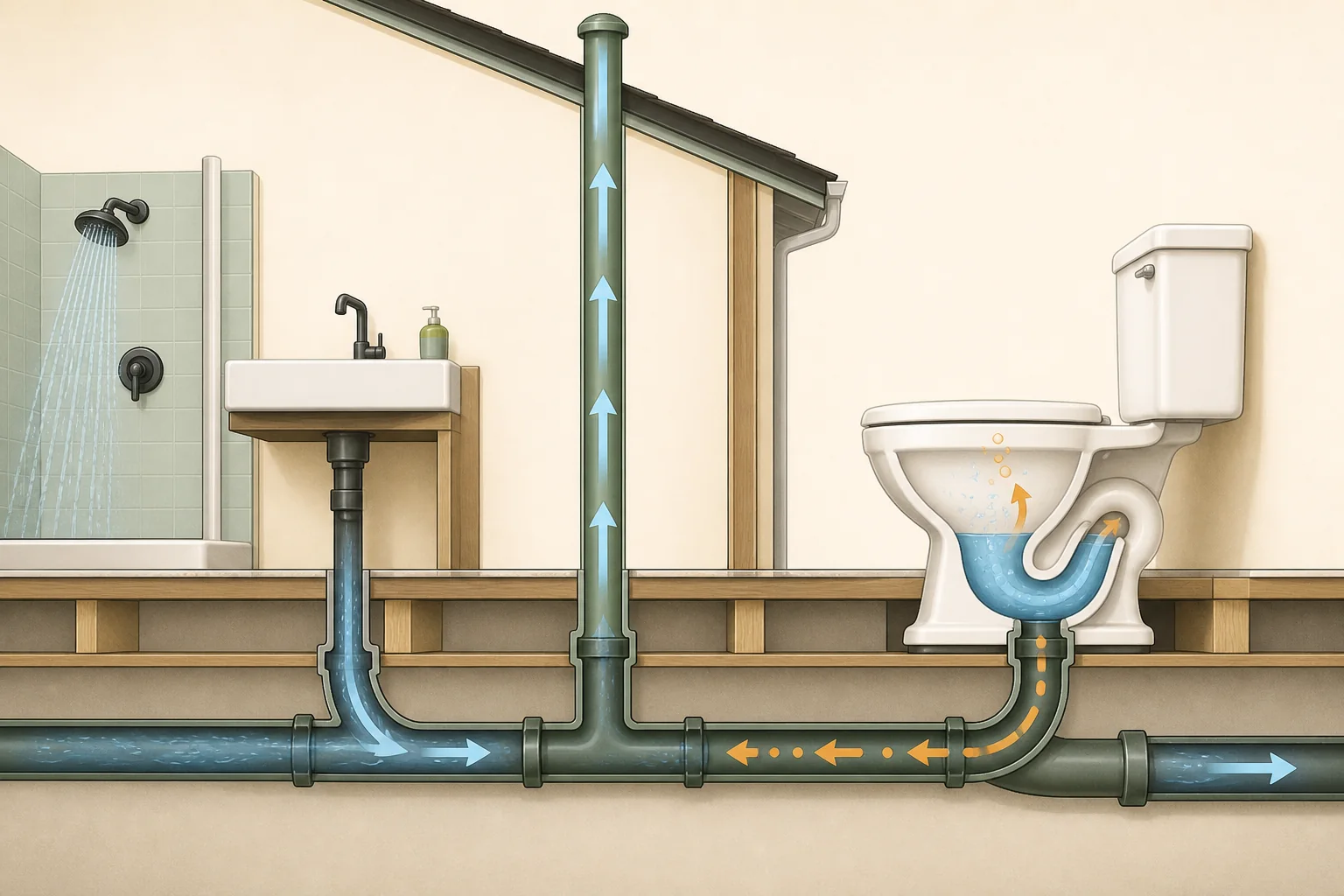
Why pressure changes make a toilet gurgle
A gravity drainage system carries wastewater while maintaining an air path. Plumbing vents admit or release air so pressure changes do not disturb the water seals in fixture traps. The toilet includes its own curved trap, and the water visible in the bowl is part of that seal.
When wastewater meets a narrowed drain, it can move more slowly and displace air differently than it should. If the normal air path cannot keep up, pressure may push or pull at a connected trap. Air passing through the toilet's water produces bubbles, glugs, or a change in bowl level. The noise identifies a pressure interaction; it does not reveal whether the restriction is beside the toilet, farther downstream, or in the vent system.
Common reasons a toilet gurgles without being flushed
Several conditions can create a similar sound. The affected fixtures, water-level movement, and timing provide better clues than volume alone.
- 1A branch drain is partly restricted
A narrowing in the toilet's branch or a nearby shared branch can reduce space for wastewater and air movement. The toilet may still flush normally between events, then react when another fixture sends a larger volume downstream. Sound alone cannot locate or identify the obstruction.
- 2The vent system is not equalizing pressure normally
Vents protect fixture trap seals by limiting drainage-system pressure differences. A restricted, damaged, undersized, or incorrectly arranged vent can contribute to gurgling. It is one possibility, not the default diagnosis; partial drain restrictions can create much the same symptom. Roof access and vent clearing are not safe homeowner tests.
- 3A restriction is developing farther downstream
A building drain, private sewer lateral, or other shared downstream pipe can begin losing capacity before a full backup occurs. Gurgling at several fixtures, slow drains in different rooms, bowl-level changes, or reactions at a low tub, shower, or floor drain make this broader path more concerning.
- 4Another fixture is creating the pressure event
A fast or concentrated discharge elsewhere can expose a drainage or venting weakness. If the pattern consistently follows a washing machine, use the washer-specific guide; if it follows another fixture, tell the plumber the exact sequence without assuming that fixture caused the restriction.
- 5A septic-system condition is affecting drainage
For a septic property, a full tank, impaired outlet, saturated drainfield, hydraulic overload, or another malfunction can coincide with slow drains, gurgling, backups, odors, alarms, or wet drainfield areas. Gurgling alone does not diagnose septic failure or identify which component needs service.
- 6An outside sewer event is affecting the house
A municipal main obstruction, system surcharge, or sewer-maintenance pressure event can sometimes make connected fixtures react. Similar reports from neighbors, utility work, rain timing, or a utility notice provides useful context, but most homeowners still need the private and public sides distinguished before assigning responsibility.
What is the toilet actually doing?
| Observation | What it may mean |
|---|---|
| A gurgling sound only, with a steady bowl level | A pressure disturbance without an immediate visible backup; monitor whether it repeats or follows another fixture |
| Bubbles rise through the bowl water | Air is passing through the toilet trap, but the bubbles do not locate the restriction |
| The bowl level rises or falls | A stronger pressure or drainage interaction than sound alone and a reason to check other fixtures |
| The toilet also drains slowly | A local toilet or shared downstream restriction becomes more plausible |
| A tub, shower, or floor drain takes water when another fixture runs | A broader downstream restriction may be preventing wastewater from leaving normally |
| Sewage or dirty water enters any fixture | An active sanitation problem requiring reduced water use, isolation from the area, and prompt professional help |
One gurgling toilet versus several reacting fixtures
This comparison helps set urgency; it cannot map concealed piping or replace a drain inspection.
Only one toilet gurgles
A local toilet branch, nearby shared branch, or vent arrangement may deserve attention first. A single reacting toilet does not prove the problem is immediately beside it, especially if another fixture reliably triggers the sound.
Several toilets or drains react
A shared stack, building drain, private sewer, septic system, or outside sewer condition becomes more plausible. Multiple affected fixtures—especially on different floors or at the lowest drain—justify earlier evaluation because the available drainage path may be narrowing.
If the washing machine is the trigger, use the narrower pattern
A toilet that reacts specifically while the washer pumps out has a known high-flow trigger and a shared laundry/drainage question. That repeatable event deserves its own branch, standpipe, vent, and downstream comparison.
Use Why Does My Toilet Bubble When the Washer Drains? when washer discharge—not unexplained timing—is the defining clue.
When another toilet is the clear trigger
A repeatable toilet-to-toilet interaction is more specific than an unexplained gurgle. If one flush makes another bowl rise, bubble, or surge, compare the size of the water-level change and whether other low fixtures react.
Use Why Does My Toilet Water Rise When Another Toilet Flushes? for that known-trigger pattern and its backup warning signs.
What you can observe safely
Do not remove the toilet, open a pressurized cleanout, snake a main sewer, climb to a roof vent, enter a septic tank, dismantle vents, or combine drain products. Chemical cleaners do not reveal whether the problem is a vent, branch, sewer, or septic condition and can create exposure risks for anyone who later opens the system.
- Note which sinks, showers, tubs, dishwashers, washing machines, toilets, or pumps ran in the few minutes before the sound.
- Watch from a clean, dry location to see whether the bowl stays steady, bubbles, rises, or drops.
- Check whether nearby drains empty slowly or make noise without intentionally filling them for a test.
- Compare toilets on other floors and note whether a low tub, shower, or floor drain reacts.
- Record sewer odor, recent heavy rain, utility work, and whether neighbors report drainage trouble.
- For a septic property, note alarms, recent service history, slow drains, odor, or wet drainfield areas without opening or entering the tank.
- Keep a short sequence log and photographs of any water-level change or visible backup for the plumber.
Rising wastewater changes the response
Gurgling is an observation. Sewage entering a toilet, tub, shower, floor drain, or room is an active sanitation problem. Avoid contact, keep children and pets away, and stop unnecessary use of toilets, sinks, showers, dishwashers, and washing machines that add wastewater.
When several fixtures are slow, gurgling, or taking wastewater together, use Why Do Multiple Drains Back Up at the Same Time? for the broader shared-drain pattern.
A whistle after flushing is a different plumbing path
A gurgle or bubble in the bowl concerns drainage air and wastewater movement. A high-pitched whistle that begins after flushing while the tank refills usually comes from the clean-water supply and fill-valve side.
Use Why Does My Toilet Whistle After Flushing? when refill timing—not bowl bubbling—is the defining symptom.
When to call a plumber
Arrange a plumber when unexplained gurgling repeats, the bowl level changes, the toilet drains slowly, another fixture triggers the event, several toilets react, or the pattern is spreading. A plumber can evaluate the toilet branch, venting, accessible cleanouts, building drain, and private sewer without assuming the sound reveals the fault.
Call promptly and reduce wastewater use when a tub or shower receives wastewater, several fixtures back up, the lowest drain reacts, sewage appears, or the problem is worsening quickly. For septic properties, a qualified septic provider may need to inspect the tank, outlet, pumping components, or drainfield after the building drain is considered. For public-sewer properties, contact the sewer utility when neighbors are affected, a plumber locates the problem beyond the private lateral, or the utility requests reports.
Sources
- Chapter 9: Vents, 2024 International Plumbing CodeInternational Code Council
- Chapter 7: Sanitary Drainage, 2021 International Plumbing CodeInternational Code Council
- Resolving Septic System MalfunctionsU.S. Environmental Protection Agency
- If You Have a Plumbing BlockageTown of Simsbury Water Pollution Control
- Side Sewer BackupsSeattle Public Utilities